The Sahara has a way of catching first-time visitors off guard, and it's rarely the heat that does it. It's the cold. Travelers arrive prepared for scorching daytime sun and then find themselves shivering around the campfire after dark, because nobody told them that desert nights — even in the height of summer — can drop dramatically once the sun goes down. Packing well for a Sahara desert tour isn't complicated, but it does mean packing for two very different climates that happen to occur in the same 24 hours.
Here's what actually matters, based on what the desert really does to you, not a generic travel-blog checklist.
Layer for the Temperature Swing
The single most important thing to understand about desert packing is that daytime and nighttime temperatures can differ by 20°C (roughly 35°F) or more, even outside of winter. Midday sun over the dunes can be intense, but the second that sun drops below the horizon, the sand stops radiating heat almost immediately and the temperature falls fast.
The fix isn't packing separate "hot weather" and "cold weather" outfits — it's layering. Bring lightweight, breathable clothing for daytime (natural fibers like cotton or linen breathe far better than synthetic fabrics in dry heat), and pack at least one warm mid-layer — a fleece or warm jumper — plus a proper jacket for the evening and night. If you're doing an overnight camp, most camps provide blankets, but having your own layer to wear at dinner and around the campfire makes a real difference to comfort.
Sun Protection Is Non-Negotiable
There's very little shade once you're out among the dunes, and reflected light off the sand intensifies UV exposure beyond what you'd expect from the air temperature alone. A wide-brimmed hat or a cap with neck coverage matters more here than almost anywhere else you'll travel in Morocco. Pair it with proper UV-protection sunglasses — the sand reflects glare aggressively, and squinting through a two-hour camel trek is nobody's idea of a good time.
Sunscreen should be high SPF and reapplied more often than you'd think necessary, particularly on your neck, ears, and the backs of your hands, which get overlooked constantly and burn fast in desert sun.
A Scarf or Turban Isn't Just for Photos
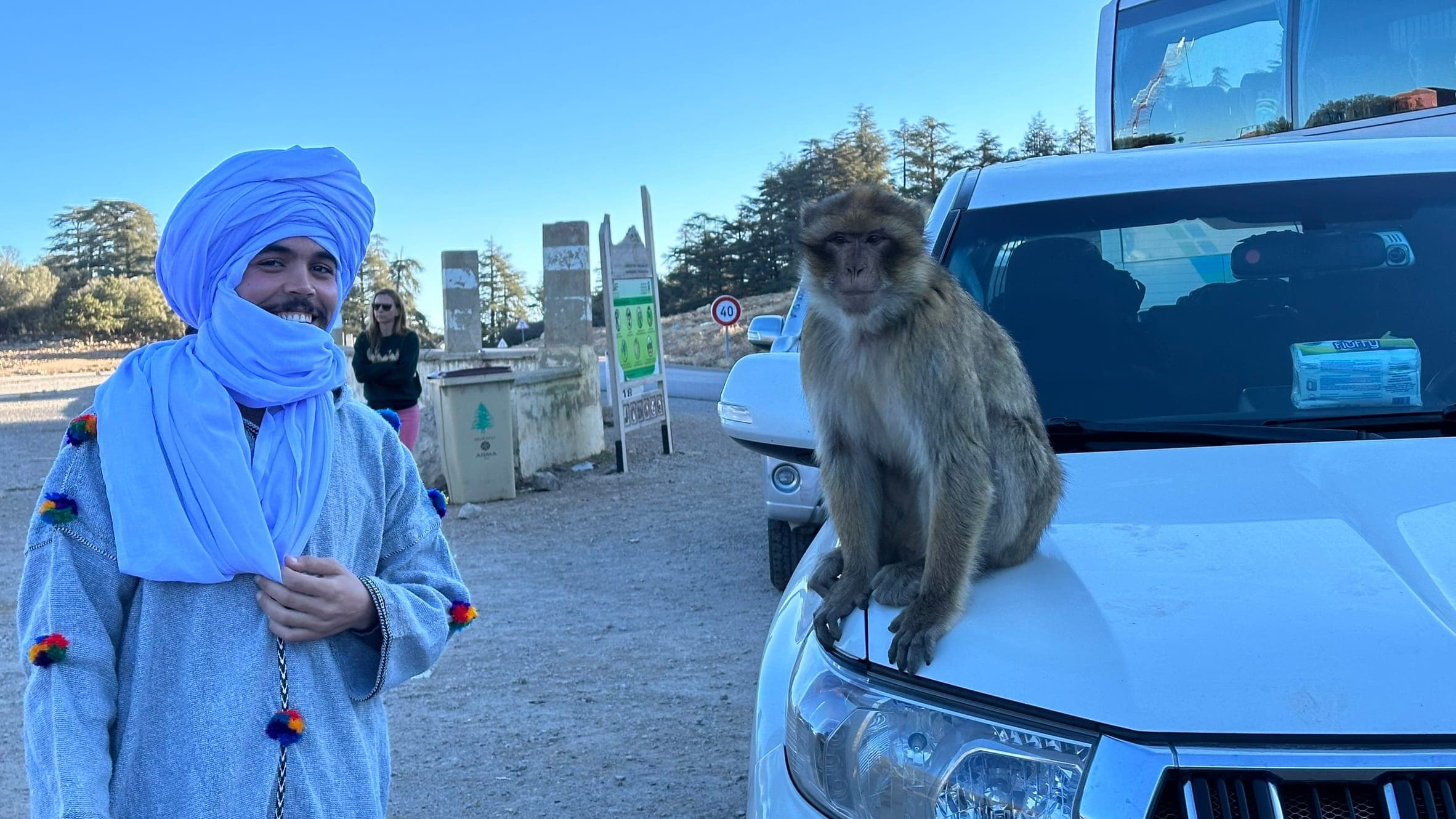
Almost every desert tour includes the moment where your guide hands you a traditional scarf or turban to wrap around your head before the camel trek starts. It looks great in photos, but it's genuinely functional gear — it protects your face and neck from sun and, more importantly, from blowing sand if the wind picks up. If you want your own rather than a shared/rented one, a light cotton scarf or shemagh packed from home works just as well, or you can pick one up from a shop in Marrakech or Fes before heading out to the desert.
Footwear: Skip the Sandals
It's tempting to think "desert equals sandals," but closed, comfortable shoes are the better call. You'll be mounting and dismounting a camel, which involves an awkward sudden lurch forward and backward that's easier to manage with shoes that grip and support your ankle. Once you're walking on the dunes themselves, sand gets everywhere regardless of footwear, but closed shoes protect you from hot sand at midday and cold sand at night, and they're far more practical if your itinerary includes any walking around rockier terrain near camp. A broken-in pair of trainers or light hiking shoes is the sweet spot — you don't need heavy boots.
A Headlamp or Small Flashlight
Desert camps generally run on generators, solar power, or lanterns rather than the kind of full lighting you'd expect at a hotel, and once you're away from the campfire, it gets genuinely dark — no ambient city light anywhere nearby. A headlamp or small flashlight makes the walk from the campfire to your tent, or a nighttime bathroom trip, far easier than relying on your phone's flashlight and running down the battery you'll want for a camera in the morning — and if you're staying up for the stars, you'll want it on hand without draining your phone.
Dress with Local Culture in Mind
Morocco is a Muslim country, and rural and desert communities tend to be more conservative than tourist-heavy parts of Marrakech. Loose, modest clothing that covers shoulders and knees is appreciated and, frankly, more practical in the sun anyway. This matters most in villages and smaller communities along the route, less so once you're specifically at the camp itself, but it's a good default for the whole trip.
Power and Small Essentials
A portable power bank is worth packing, since charging opportunities at camp can be limited depending on which camp you're staying at. Bring a printed or downloaded offline copy of anything you need — signal in the desert is patchy at best. Cash in small denominations is useful for tipping camel handlers and camp staff and for small purchases, since card payment isn't reliable this far from a city.
A reusable water bottle is worth bringing too — staying hydrated matters more than people expect, even when it doesn't feel that hot in the evening air.
A Simple Packing Checklist
- Lightweight, breathable daytime clothing (cotton/linen)
- A warm layer (fleece or jumper) plus a jacket for evening/night
- Wide-brimmed hat and UV-protective sunglasses
- High-SPF sunscreen
- A scarf or turban for sun and sand protection
- Comfortable closed shoes, broken in beforehand
- Headlamp or small flashlight
- Portable power bank
- Cash in small denominations for tips
- Reusable water bottle
Pack light where you can — you won't need much once you're actually out among the dunes, and less luggage makes the transition from vehicle to camel that much smoother.
Ready to put this list to use? Take a look at our Marrakech to Merzouga desert tour for one example of what a short Sahara departure looks like.