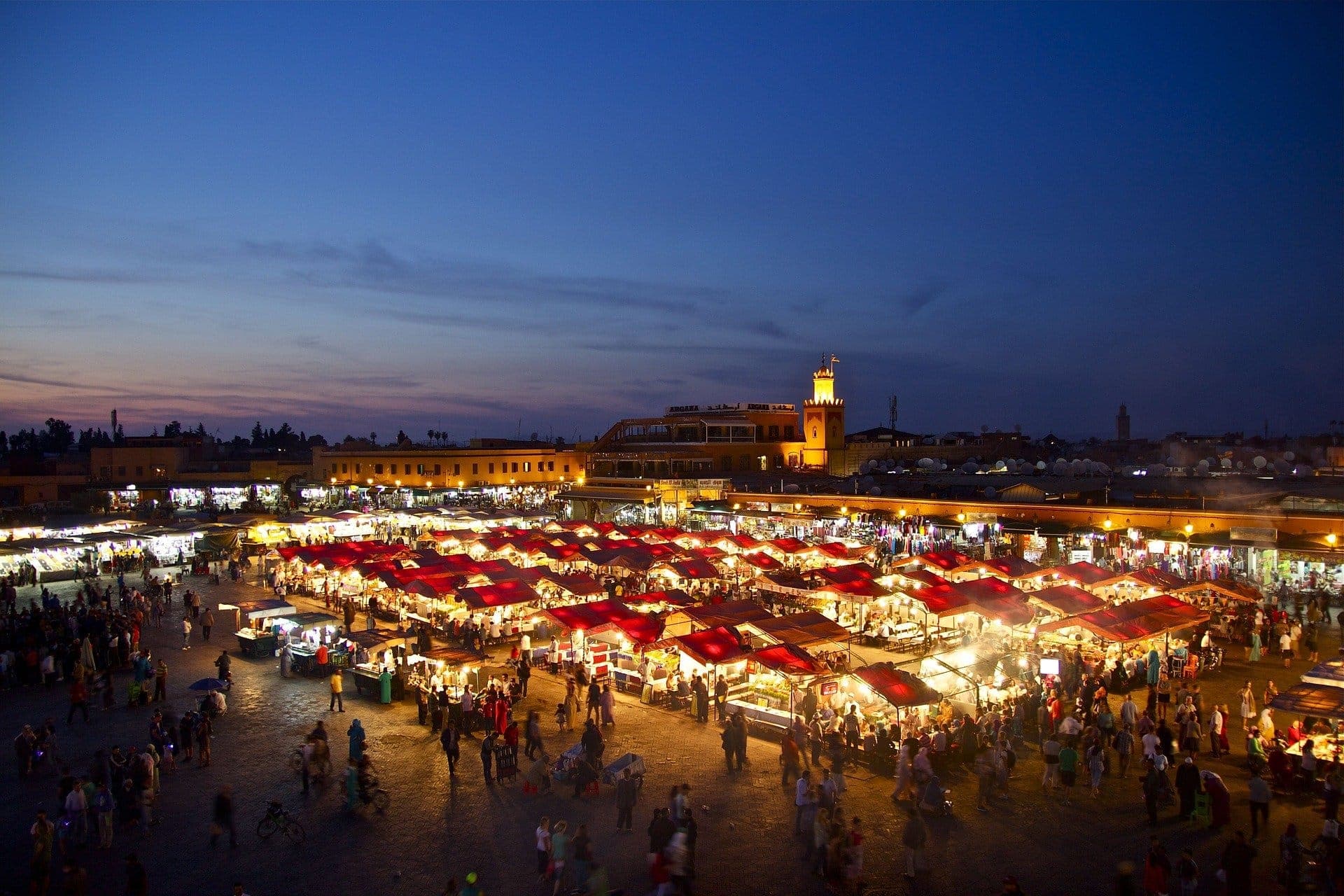
Morocco is one of those destinations that photographs beautifully in a way that makes independent travel look effortless — a rental car, an open road, the Atlas Mountains rolling past the window. The reality of actually driving that road, or navigating a medina without a word of Arabic or French, or figuring out which desert camp is legitimate and which is a tourist trap, is considerably more complicated than the photos suggest. That gap between how Morocco looks online and how it actually works on the ground is exactly why small-group escorted tours have become the default choice for a large share of travelers here — not because independent travel is impossible, but because escorted touring removes a specific set of real obstacles that most visitors underestimate until they're already dealing with them.
The Roads Are Genuinely Demanding
Start with something concrete: the Tizi n'Tichka pass, the main route connecting Marrakech to the south and the Sahara, climbs to over 2,200 meters through the High Atlas Mountains on a road full of switchbacks, unmarked hazards, occasional rockfall, and — depending on the season — snow or ice at altitude. It's a spectacular drive, and also not one that most travelers renting a car for the first time in a foreign country are well prepared to handle, especially after an overnight flight or a long day of sightseeing. Add in unpredictable local driving conventions, minimal lighting at night, and mountain weather that can change quickly, and a route that looks like a scenic afternoon drive on a map becomes a serious undertaking behind the wheel.
On an escorted tour, that entire problem disappears. Your driver knows the route, knows the pass in different seasons and conditions, and has made the drive more times than you can count. You get to actually look at the mountains instead of watching the road.
Language Barriers Are Real Outside the Big Cities
In Marrakech, Fes, or Casablanca, you'll find enough English, French, and tourist infrastructure to get by reasonably well on your own. Step outside those cities — into smaller towns, rural villages, or the areas around the desert — and that changes quickly. Arabic and Tamazight (Berber) are the working languages, and independent travelers without French or Arabic often find themselves unable to communicate much beyond gestures once they're off the main tourist track.
This matters for more than convenience. It affects your ability to negotiate fairly in markets, understand what you're actually eating, ask for help if something goes wrong, or simply have a real conversation with the people whose country you're visiting. A guide bridges that gap constantly, translating not just words but context — what's a reasonable price, what's expected in a given situation, what a gesture or invitation actually means.
Cultural Access You Can't Book on Your Own
This is the advantage that's hardest to replicate independently, and the one travelers most often say they didn't expect. A knowledgeable local guide doesn't just show you sites — they open doors, sometimes literally. Invitations into a Berber family's home for tea, an explanation of why a particular carpet pattern means what it does, an introduction to a craftsman in a medina workshop who wouldn't otherwise have any reason to let a stranger in — these moments happen because a guide has relationships and standing in these communities that a first-time independent visitor simply doesn't have access to.
There's also a quieter benefit: knowing what's expected of you. Morocco has social and religious customs — how to dress respectfully, how to behave in a mosque courtyard, when bargaining is appropriate and when it isn't — that aren't always obvious to outsiders. A guide steers you around the small missteps that can make a traveler feel (and look) out of place, so you can engage with genuine confidence instead of hesitation.
The Logistics Disappear So You Can Actually Be Present
Independent travel in Morocco means being your own logistics coordinator on top of being a tourist: booking accommodation as you go (or in advance, and hoping it matches the photos), finding trustworthy transport between cities, working out which desert operators are reputable, sorting meals, and troubleshooting anything that goes wrong entirely on your own, often in your second or third language.
On an escorted tour, all of that is handled before you land. Accommodation, transport, meals, and the day-to-day itinerary are arranged, which means the mental energy you'd otherwise spend managing the trip goes instead into experiencing it. That's a bigger deal than it sounds — travel fatigue from constant logistics-solving is real, and it's the reason people come home from ambitious independent trips feeling like they need a holiday from their holiday.
Group Travel Without Losing the Personal Feel
A common assumption is that group touring means big buses and a rigid schedule with forty strangers. Small-group escorted touring is a different thing entirely — a handful of travelers moving together, sharing a vehicle, meals, and a guide, with enough flexibility to actually engage with a place rather than just checking it off. It brings real cost efficiency compared to arranging a fully private, solo itinerary, while still giving you a guide's full attention in a way that's impossible in a large tour group. Many travelers also simply enjoy the company — shared moments watching sunset over the dunes or comparing notes over dinner tend to become part of the trip itself.
Independent Travel Isn't Wrong — It's Just Harder Work
None of this means independent travel in Morocco is a bad idea. Confident, experienced travelers with some language ability and a taste for figuring things out as they go can absolutely have a great independent trip here. But for most visitors, especially first-timers, the honest tradeoff is this: independent travel asks you to spend a meaningful amount of your trip solving logistics, navigating language gaps, and hoping you're making good calls about safety and authenticity. A small-group escorted tour trades a bit of spontaneity for the ability to actually relax into the country — to look up at the mountains instead of the road, and say yes to the tea in someone's home instead of wondering if it's safe to accept.
That's the case for escorted touring in Morocco: not that it's the only way to do it, but that for most people, it's the way that actually delivers the trip they pictured when they started planning it. Our 7-day Marrakech to Sahara itinerary is a good example of what that actually looks like on the ground — or browse our full range of small-group tours to see the rest of the routes we run.